WW2 Roll of Honour
Berry Ernest Serjeant 1773133
269 Bty. 77 Lt. A.A. Regt. Royal Artillery
Born 17th May 1916 in Wednesbury in 1921 he was living at 24, Court, Temple Street, Bilston with his adoptive parents Samuel and Mary Taylor and their daughter Mary Ellen. By 1939 all four were living at 15 Lavender Grove Bilston, Ernest was employed as a common & bright tinner at Sankeys & Sons. He married Lilian Asprey March 1940 in Bilston.
Died 4th September 1944 aged 28.
5.F.12. Chittagong War Cemetery, Chattogram, Bangladesh.
Copson, Herbert Serjeant S/2216309
Royal Army Service Corps.
Born 25th July 1891 at 48 King Street Bilston son of Luke and Elizabeth Copson in 1901 they were living at 21 Chapel Street Bilston along with older brothers Luke and William. In 1911 the family remained living there and Herbert was employed as a clerk.
Herbert married Maud Smith 2nd March 1913 at St. Mary's Church Bilston, they had two sons William born in 1914 and George in 1916.
During the First World War Herbert attested into the Army 23rd February 1916 at the Drill Hall Bilston, he was employed as a commercial clerk at Sankeys and was living at 64 A Bank St, Bradley Bilston with Maud, and their children.
Herbert joined the Notts and Derby Regiment later being transferred to the Liverpool Regiment 26th January 1917. Herbert was promoted to Serjeant 12th May 1916 rising to the rank of Company Quarter Master Serjeant 23rd December 1918. Herbert was transferred 12th May 1917 to 305 Labour Corps under Category B3 - only suitable for sedentary work, he was demobilized 9th March 1919.
Herbert reenlisted into the Royal Engineers, Territorial Army 24th June 1925 leaving 25th April 1927. Herbert then again enlisted 3rd July 1931 into the Royal Army Service Corps Territorial Army.
Herbert died 2nd February 1940 aged 48 of pneumonia in Kettering Hospital, Northamptonshire, at the time of his death the family home was 'Belmar' Sutherland Road Bilston.
Buried in Sec. A. Old portion. Grave 1410.6. Bilston Cemetery.
Davies William Private 5254234
7th Bn. Worcestershire Regiment.
William was born 21st June 1918 in Sedgley son of Charles and Sarah Jane Davies. In 1921 they were living at 100 Cross Street, Bradley along with William's older siblings Sarah Jane, Mary, Samuel, Charles, and Alfred and younger sister Mary.
By 1939 William was still living with his parents at the same address, along with Charles, Mary, and another younger sister Doris. William was employed as a brass foundry labourer.
William was killed in action 8th February 1945 aged 26. 'By the beginning of February 1945, the 7th Battalion had felt its way forward to the line of the Irrawaddy River, B Company being on the banks in two hamlets, Tadaing and Dawete, D Company half a mile to the north-west at Shwele, and Battalion H.Q. in a pleasant grove of trees among some pagodas a few hundred yards back from B Company. ...on the night 7/8 February 1945 the two platoons of B Company in Dawete were heavily attacked. The telephone line to Battalion H.Q. had been cut, and it was with difficulty that the Commanding Officer with A and C Companies could move to their assistance. With first light an attack was put in on Dawete, A?Company taking up a position west of the village and C Company moving round the east flank, hoping to pinch the enemy out. The latter ran into heavy machine-gun fire so that A Company took the initiative and attempted to rush in, firing their weapons on the move. By 1120 hours A Company, after two attacks, were held, and had suffered heavy casualties.' Information taken from http://www.worcestershireregiment.com/
Face 12. Rangoon Memorial, Burma.
Hazelhurst Norman C.*
Inston Christopher Corporal 409408
Royal Armoured Corps
7th Queen's Own Hussars
Born December 1921 in Meridan, Solihull son of Edward and Florence Inston. In 1939 they were living at 16 Wilkinson Avenue, Bilston along with Christopher's older brothers Cyril and Ralph.
Killed in action 28th April 1942 aged 20. The Japanese started a major attack against the British on the 1st of April 1942 near Prome, 200 miles north of Rangoon.
As the Japanese pressed on, General Alexander decided that the British, Burmese, and Chinese armies had to make a stand, which they did near Mandalay. Fierce fighting held up the Japanese, but it could not alter the outcome. General Alexander made the decision on the 26th of April to withdraw all men to India. Finally, on the 17th May the 7th Queen's Own Hussars entered Imphal, India covering almost one thousand miles in three and half months losing forty-six killed and fifty wounded, sadly Christopher was one of those forty-six killed.
Face 1. Rangoon Memorial, Myanmar (Burma).
Inston George Edgar Corporal 554055
22nd Dragoons Royal Armoured Corps.
George was born 27th March 1916 in Birmingham son of Edward and Florence. In 1921 they were living at Dunton Whorl, Curdworth, Warwickshire along with George's older sister Alice and younger brother Cyril., Edward was employed as a waggoner.
George married Ethel Alice Asprey January 1944 in Bilston, they had a son Keith born December 1944, they were living at 24 Lord Street West, Bradley, Bilston.
George died as a result of a road traffic accident 14th October 1945 aged 29.
Jones William.
Pugh William.
SHORTHOUSE JOHN JOSEPH Private 14703954
4th Bn King's Shropshire Light Infantry
Died 06/09/1944 Age: 19
Grave/Memorial Reference: II. H. 26.
Cemetery: SCHOONSELHOF CEMETERY
Simpkins Samuel Laurence Private 4917664
2nd (Airborne) Bn. South Staffordshire Regiment
Samuel was born in Bradley, Bilston, in October 1918, the son of John and Harriett Simpkins. By 1921 the family were living at 21 Sales Street Bradley, Bilston with Samuel’s older siblings John, James, Doris, Winifred and Phyliss and his younger sister, Violet.
By 1939 the household had moved to 'The Haven' on Bradley Lane, where James, Phyliss and Violet were still at home, along with two younger sisters, Dorothy and Florence.
Samuel married Irene Tranter in Bilston in July 1942.
In November 1941 the 2nd Battalion, South Staffordshire Regiment was converted to a glider borne infantry unit within the 1st Airlanding Brigade of the newly formed 1st Airborne Division. The battalion deployed to North Africa in May 1943.
In July that year, the 2nd (Airborne) Battalion took part in Operation Ladbroke, the glider assault that opened the Allied invasion of Sicily. Flying from Tunisia, the 1st Airlanding Brigade was tasked with landing near Syracuse, securing the Ponte Grande Bridge, and helping pave the way for the capture of the city and its vital docks.
The mission was ambitious and unprecedented in scale, but the approach to Sicily proved disastrous. Sixty-five gliders were released too early by their towing aircraft and came down in the sea, resulting in the loss of around 252 men. Of those who reached land, only eighty-seven made it to the Ponte Grande Bridge, yet they succeeded in capturing and holding it beyond their planned relief time. Even so, the brigade suffered the heaviest losses of any British formation involved in the landings, with 313 killed and 174 missing or wounded.
It is believed that Samuel was among the men who drowned when his glider came down short of the coast.
Killed in action 10 July 1943 aged 24
Panel 8. Cassino Memorial, Italy.
Slater William H.
Swinnerton Samuel Guardsman 2618872
6th Bn. Grenadier Guards.
Samuel was born in March 1920 in Bradley, the son of Samuel and Edith Swinnerton. By 1921 the family now including his younger sister May were living at the back of 100 High Field Road in Bradley, Bilston. Samuel senior worked at Sankey Sons’ Manor Works in Ettinghall as a furnace man in sheet metal, part of the area’s busy industrial workforce.
By 1939 the Swinnertons had moved a short distance to 95 back Highfield Road and welcomed another child, Harold. Samuel, now nineteen, was employed as a motor frame assistant.
On 14 June 1942, the 6th Battalion left Caterham for Liverpool, beginning the long journey that would take them to the 201st Guards Brigade in the Middle East. Their first posting was in Syria, guarding the frontier and protecting the vital oil pipelines at Kirkuk. From there, they moved on to join General Montgomery’s forces in North Africa, retraining as motorised infantry.
In March 1943, just sixteen days after leaving their base at Qatana in southern Syria, the Battalion linked up with the leading elements of the 8th Army and camped that night behind the gun lines. Four days later 17 March, the youngest Battalion in the Regiment fought its first major action at the Battle of the Horseshoe on the Mareth Line. The 6th suffered heavy losses, with 16 officers and 76 other ranks killed, with many more wounded after advancing through a dense minefield under inaccurate intelligence. They had been told the position was lightly held, when in fact it was defended by the elite German 90th Light Division. It later emerged that the battle plans had been captured two days earlier, a fact known to high command, meaning the German defenders were fully prepared for the attack. Sadly, Samuel was one of those killed.
Killed in action 17 March 1943 aged 23.
Samuel has no known grave and is remembered Face 11. Medjez-el-bab Memorial, Tunisia.
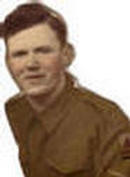
Wiltshire Joseph William Lance Corporal 4916982
1/6th Bn South Staffordshire Regiment
Joseph was born September 1909 in Bradley, Bilston son of Joseph and Phoebe Wiltshire. In 1911 they were living at 64 Cross Street Daisy Bank, Bradley, Bilston along with Joseph's older siblings Frances and Frederick. Joseph senior was employed as a boot repairer. By 1921 the family were now living at 60 Cross Street.
Joseph married Beatrice Robinson in September 1939 in Rowley Regis and lived at 43 Norton Crescent, Coseley, with Beatrice's parents.
Joseph was a member of Wolverhampton Wheelers cycling club and was involved in local politics.
Joseph's parents went on to live in Lane Street Bilston and owned the Wiltshire drapers in Bilston and Great Bridge.
The 1/6th Bn. South Staffordshire Regiment crossed the Channel in late June as part of the 59th Division and by the 1st of July had moved to the front-line facing Caen. The city was fiercely defended and earlier attempts to outflank it had been frustrated by continued German counter attacks. General Montgomery had, therefore, decided on a frontal attack preceded by heavy aerial bombardment. On the 8th of July, a strong attack was launched on a broad front and by the 9th most of the city had fallen. The Division moved quickly south to the bocage country; their task was to take the village of Noyers.
On 15th July, the troops assembled in their assault positions the 1/6th on the right of the assault. At 5.30am on the 16th the attack commenced in thick morning mist by about 6.45 am the Battalion had captured the village of Brettevillette 1½ miles north of Noyers and two hours later Queudeville. Both were defended strongly and only taken at the cost of many casualties some from British minefields that had not been cleared before the attack. Sadly, Joseph was one of those casualties.
Killed in action 16 July 1944 aged 34.
V. C. 11. Fontenay-le-pesnel War Cemetery, Tessel, France.
With thanks to Janet Ford for the picture and additional information.
